
Pilot 3: Air Quality
Urban air quality monitoring with low-cost IoT sensors and citizen communities
Poor urban air quality causes serious health issues across Europe. Accurate and localized monitoring is the first step towards better informed decisions about health in cities and urban environments. AD4GD has explored the potential benefits of IoT data for enhancing local air quality monitoring, increasing the density of the observation networks and the resolution of the air pollution insights. Notably, some of these sensors are operated and maintained by citizens, thereby fostering community involvement and promoting local engagement.

Berlin is considered to be a “green city”. 30% of its total area is covered by forests and other green spaces. 6% is covered by water. The latter comprises not only the Spree-Havel river and lake system, but also more than 300 small lakes, of less than 50 hectares in size each, that are distributed throughout its urban fabric.
Berlin’s ecosystems face challenges related to the city’s rapid densification and climate change. In particular, many of those small lakes suffer from the increased ocurrence of temperature and rain extremes.
Urban lakes are crucial sources of freshwater for humans and can have tremendous ecological benefits. On one hand, they are home to a variety of aquatic and terrestrial plants and animals, making them important biodiversity hotspots. They are also climatic refuges, helping to help cool down cities by reducing the heat island effect, and provide spaces for leisure, which support citizens physical and mental health.

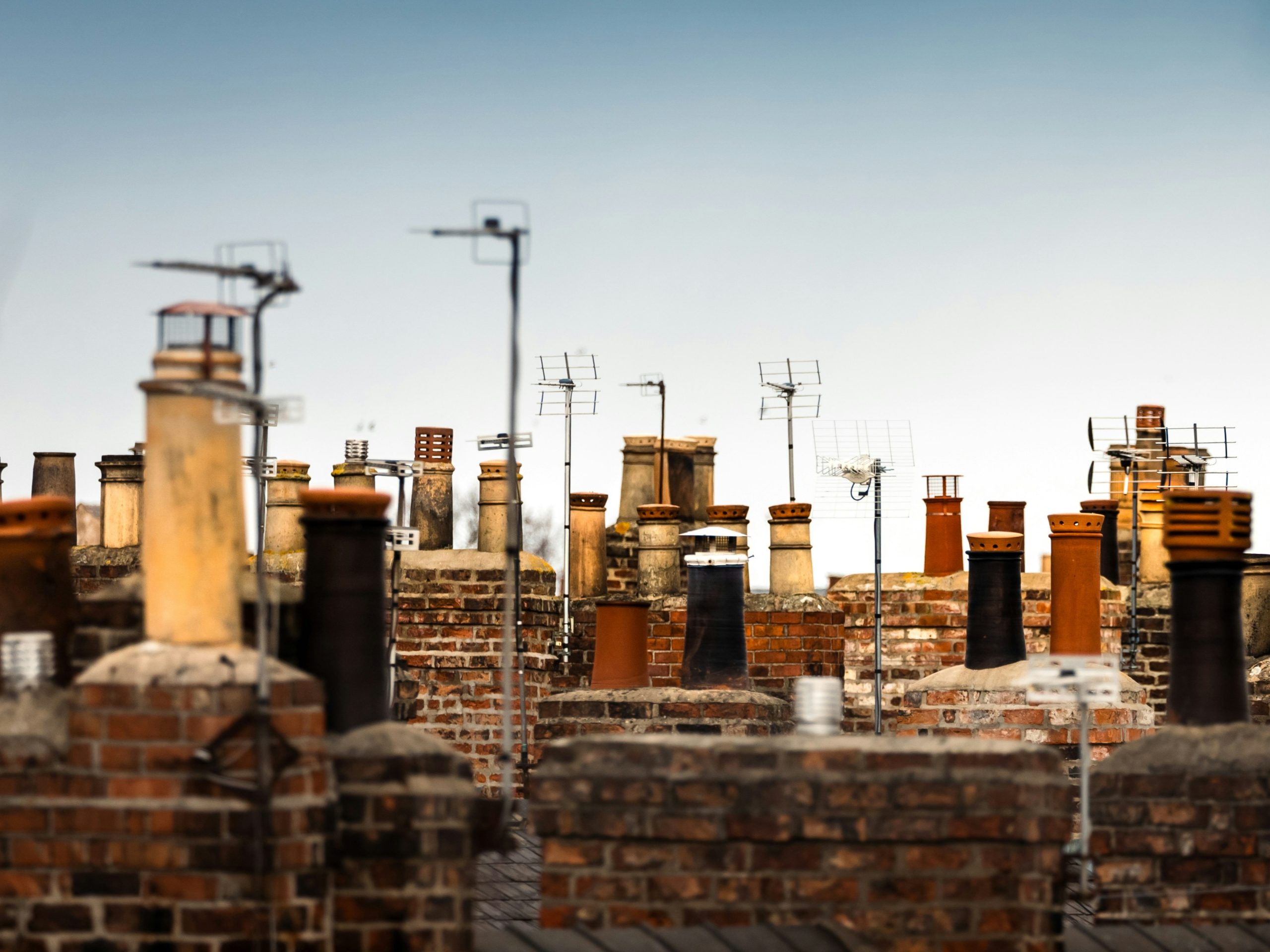

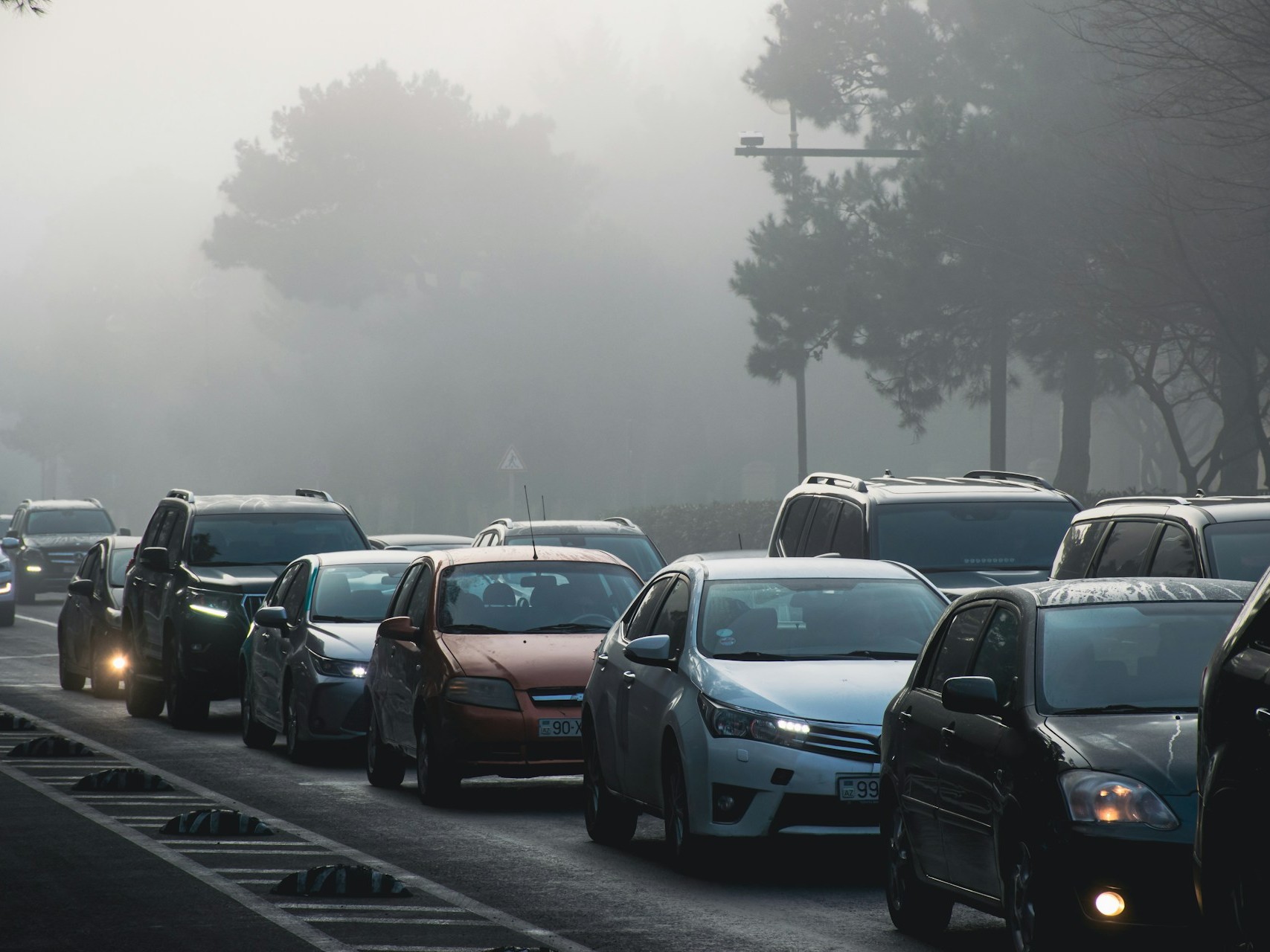
The air we breathe is eventually polluted with particulate matter, ozone, nitrogen dioxide, sulfur dioxide and carbon monoxide which, acording to the WHO, present robust evidence of risks for public health. These pollutants originate from natural sources and human activity, including combustion, transportation, cooking, heating, waste dump sites, industrial activities, and agriculture.
Breathing polluted air may contribute to the development of cardiovascular and respiratory diseases such as ischemic heart disease, chronic obstructive pulmonary disease, pneumonia or asthma, among others.
Advocating for a proper air quality is crucial for the Green Deal and the Sustainable Development Goals, specifically target 3.9 and target 11.6. Compliance with climate change mitigation policies could reduce PM2.5 emissions by 17% and prevent more than 74,000 premature deaths annually in Europe.
Air quality monitoring networks are usually sparse and unable to provide high resolution insights. This is especially pronounced in densely populated areas, where strong gradients exist, and a wide variety of sources contribute to the overall pollution levels.
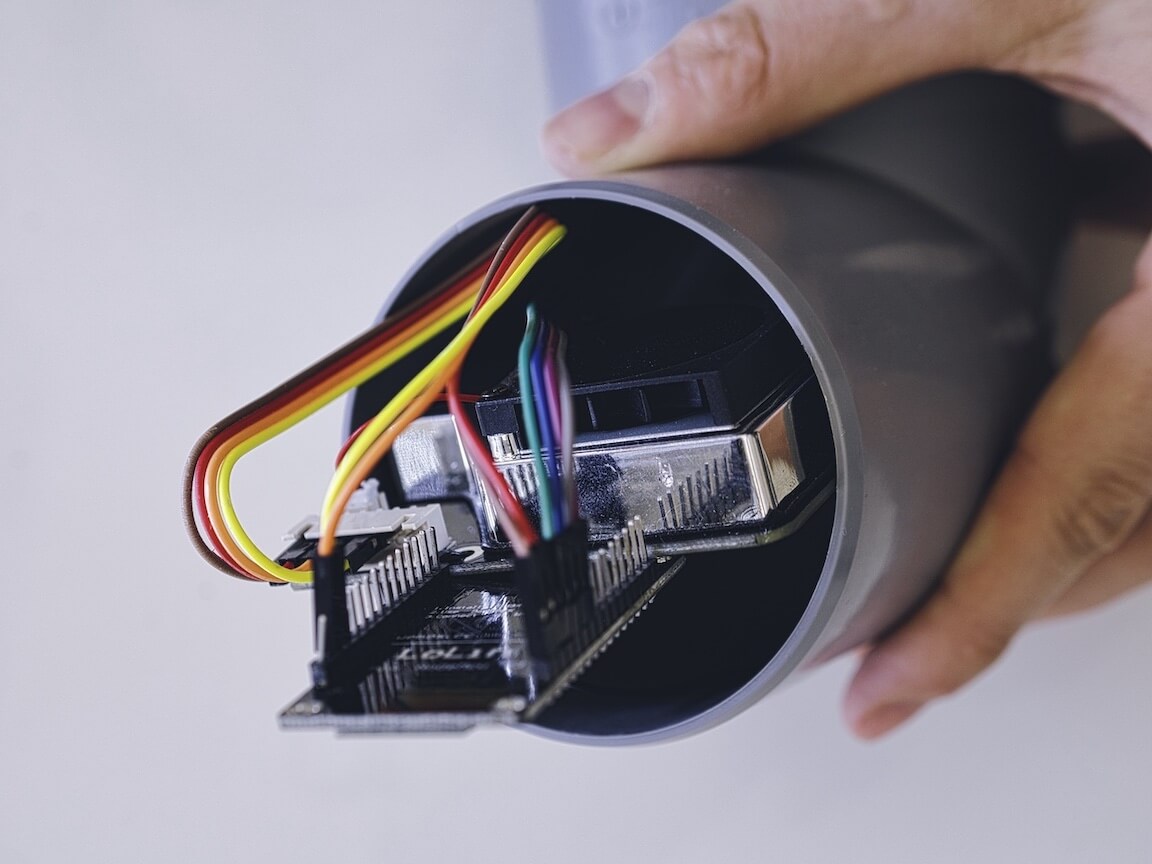
Low-cost sensors present significant opportunities for air quality monitoring. They enable the creation of dense measurement networks that provide real-time, localized data on air pollution levels, facilitating the identification of pollution hotspots and trends, the development of early warning systems and informing mitigation strategies.
However, the accuracy and reliability of low-cost sensors is usually a challenge. These sensors are generally less durable and maintained by non-professionals, resulting in concerns about the consistency and quality of the measurements.
The AD4GD Approach
Combining IoT, citizen science and Earth observations for improved decision making
AD4GD has developed a Water Quality Index (WQI) for polluted small urban lakes by combining IoT, citizen science and Earth observation data with AI technologies to identify drivers and indicators of water quality stressors. A Water Availability Index (WAI) has also been created by combining Earth observation data with IoT measurements and citizen science-based assessments of water levels. All data is validated ensuring compliance with the FAIR principles. All these insights are displayed in a user-centered Graphical User Interface called Splashboard, enabling stakeholders to better assess Berlin’s small lakes, identify those with the greatest management needs and prioritizing actions for current and future challenges based on more informed decisions.
Determining trophic status with remote sensing data
There are many Copernicus products based on Sentinel-2 data that determine water properties, including turbidity, chlorophyll content, and water level. AD4GD developed a new index to estimate the trophic status of lakes called the “normalized difference trophic index“. It is calculated by combining three years of data about the trophic status of the lakes, obtained from the Sentinel-2 L2A product. Trophic growth is determined over an entire growing season. This method was developed using 294 lakes greater than 50 hectares in Brandenburg, Germany (see Deliverable 4.2 and Zamzow et al., 2025). Applying this method to 42 Berlin lakes, AD4GD was able to rank their condition from 2018 to 2024 and identify trends (see Deliverable 6.2). This can be used, for instance, to evaluate the effects of remediation measures.
Citizen Science as lake monitoring support
Two different methods of data collection were developed for interested citizens to participate even without much experience or prior knowledge. On the one hand, qualitative data can be collected via the CrowdWater app, freely available for registered users. A questionnaire was created in close consultation with Berlin stakeholders, including inquiries about the lake biotope, water quality and water availability. The answers are translated into indicators for assessing water quality in terms of nutrients, biotope, use, and risk of water scarcity.
On the other hand, simple measurements of nutrients and conductivity were carried out by citizens at the lake shore using low-budget tests and sensors. The concentrations of phosphate, nitrite and ammonium were measured. Volunteers registered as water rangers at KWB and carried out tests at one lake every one to two months. This supports the work of lake managers, who are unable to monitor all lakes regularly. Find all details in Deliverable 6.2.
Estimating water quality with in-situ oxygen sensors
The oxygen concentration in water is directly linked to the trophic status. Algae and aquatic plants typically produce a peak in oxygen concentration during the day and lower concentrations at night. The difference between minimum and maximum oxygen concentrations at the water surface is expected to be particularly large in lakes with high nutrients levels and high trophic status. AD4GD installed oxygen sensors at a depth of 20 cm during the summer seasons of 2024 and 2025, and oxygen time series of 6 lakes were recorded. The conclusions showed that these measurements can provide interesting insights when viewed over the long term, but they are not suitable for drawing conclusions about the trophic status of small urban lakes through short-term use. Learn more in Deliverable 6.2.
Locating lakes with potential water shortages
The CrowdWater app can be used to locate lakes with water shortages and plan interventions. If rainwater is not directed to sewage treatment plants, it can be used locally as a water source for small lakes. To check this option, a generic stormwater inflow potential was developed that calculates the effective runoff volume of the surrounding areas. Levels of pollution should be considered as rainwater runoff from urban areas is usually contaminated with pollutants and nutrients, which can cause problems in lakes. Read about it in Deliverable 6.2.
Leading partner:
Useful links:
References:
> Elicegui Maestro, I., Di Pietro, F., Parkhanovich, D., Brobia, A., Maso, J., Hodson, T., & Borger, C. (2025). AD4GD D4.2 Connecting the Green Deal Data Space (initial). Zenodo.
> Bastin, L., Kriukov, V., Lush, V., Serral, I., Hodson, T., Borger, C., & Zamzow, M. (2025). AD4GD D6.2. Pilot Technical Implementation Planning, Implementation and Assessment Report. Zenodo.
> Zamzow, M., Matzinger, A., Rustler, M., and Bastin, L.: Satellite-derived trophic index to support management of small and medium-sized lakes , EGU General Assembly 2025, Vienna, Austria, 27 Apr–2 May 2025, EGU25-20482.
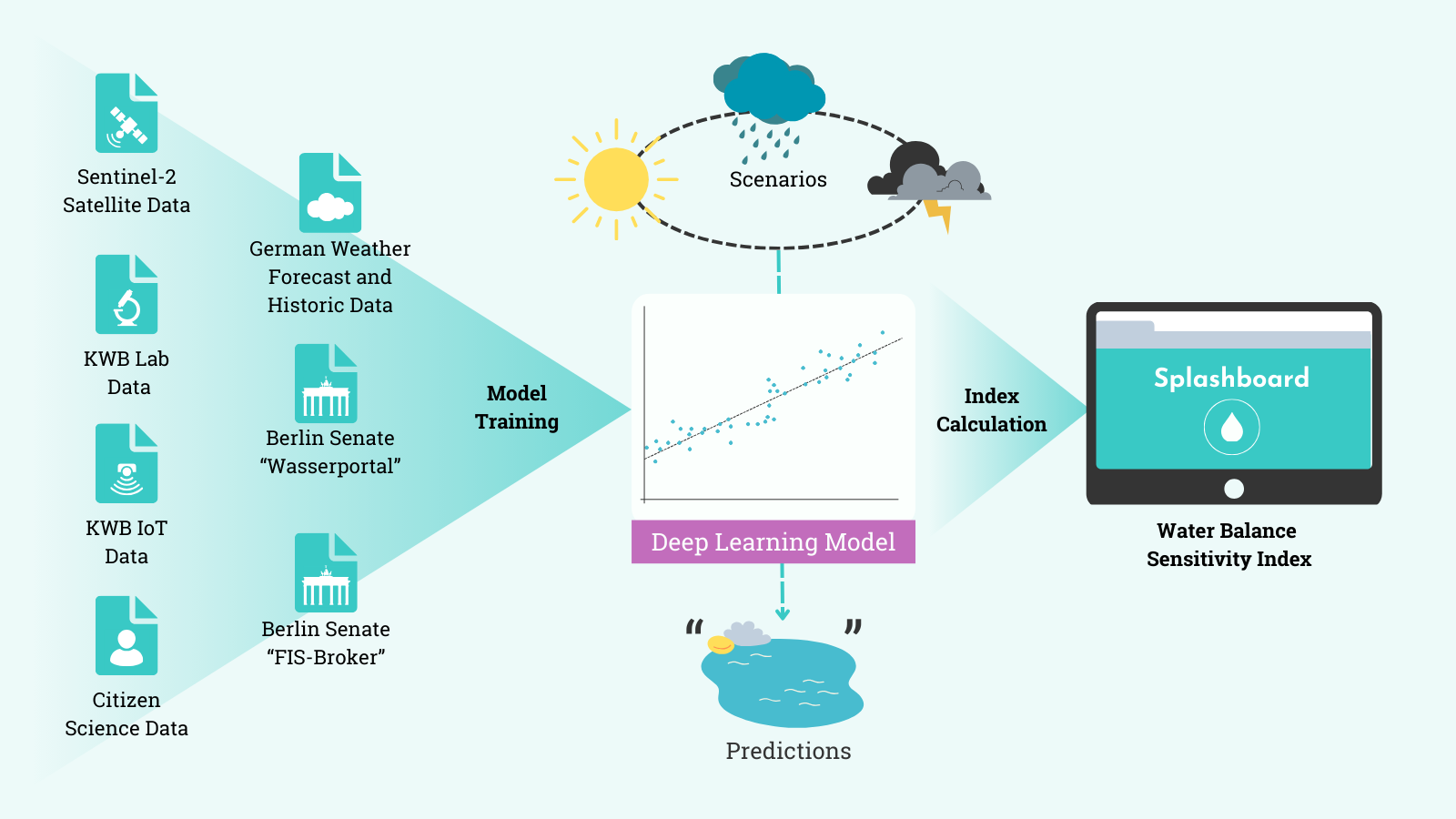
Simplified data flow schema for the water pilot. Author: Diego de la Vega (CREAF).
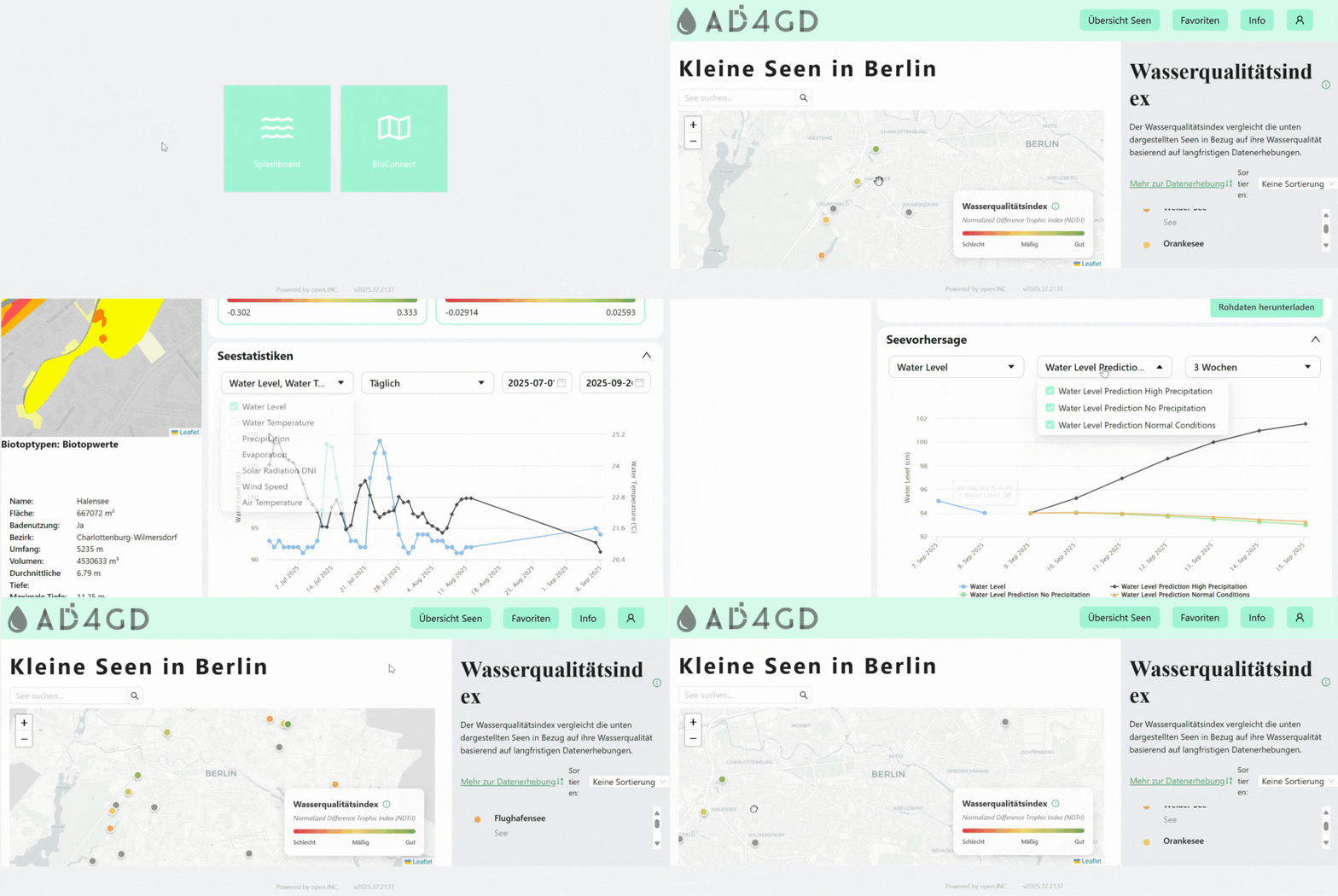
Splashboard, a user-centered interface
All the data and indices are displayed in a graphical user interface called Splashboard, co-developed with stakeholders using a Human-Centered Design approach.
The interface displays a map of Berlin along with a searchable catalogue of lakes and their trophic state. Each lake has a dedicated page presenting five key widgets: one for metadata, two for trophic indicators, a time series chart for observing historical lake measurements and water level forecasts, and a comment section for user contributions.
Splashboard is currently only available in German. To access the platform, please create an account by providing your name, email and password. Then, log in using your credentials.
LEADING PARTNER

This pilot explores the potential benefits of Internet of Things (IoT) data in enhancing our understanding of local air quality. To achieve this, observations of various air pollutants (e.g., particulate matter, such as PM2.5 and PM10) from low-cost sensors are used. Notably, some of these sensors are operated and maintained by citizens, thereby fostering community involvement and promoting local engagement. Thus, these sensors form part of high-density measurement networks, significantly enhancing the capability to monitor air quality with great detail.
Altogether, by making use of this new high-resolution data set, the primary objective is to enable better health-related decisions and improve the approaches for assessing and monitoring the quality of air in urban areas, with an emphasis on local environments.
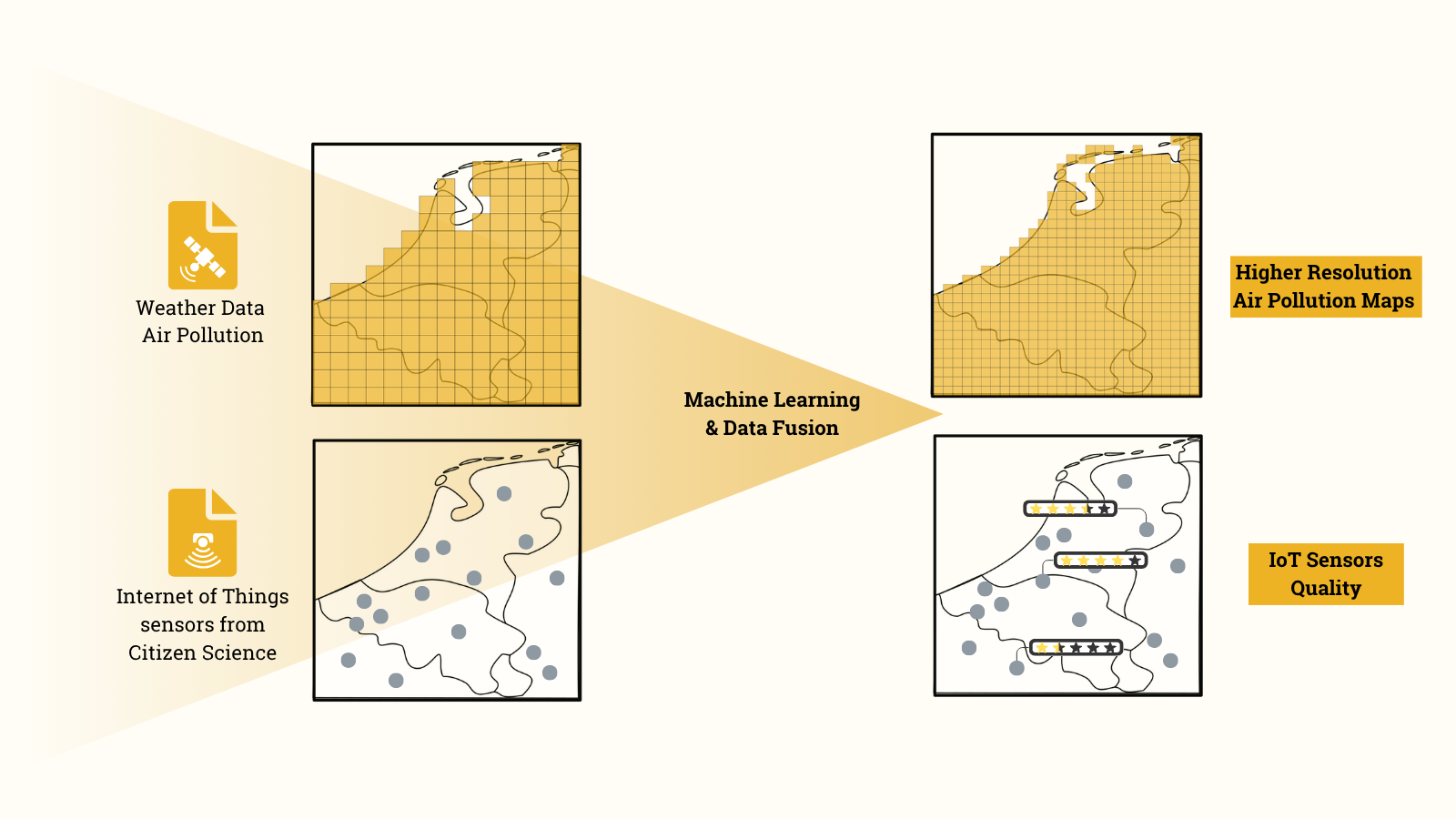
Simplified data flow schema for the air quality pilot. Author: AD4GD.
What is air pollution?
As defined by the World Health Organization (WHO), air pollution is the contamination of the air we breathe, indoors or outdoors, by any chemical, physical or biological agent that modifies the natural characteristics of the atmosphere and is potentially harmful to human and ecosystem health.
Which pollutants do we breathe daily?
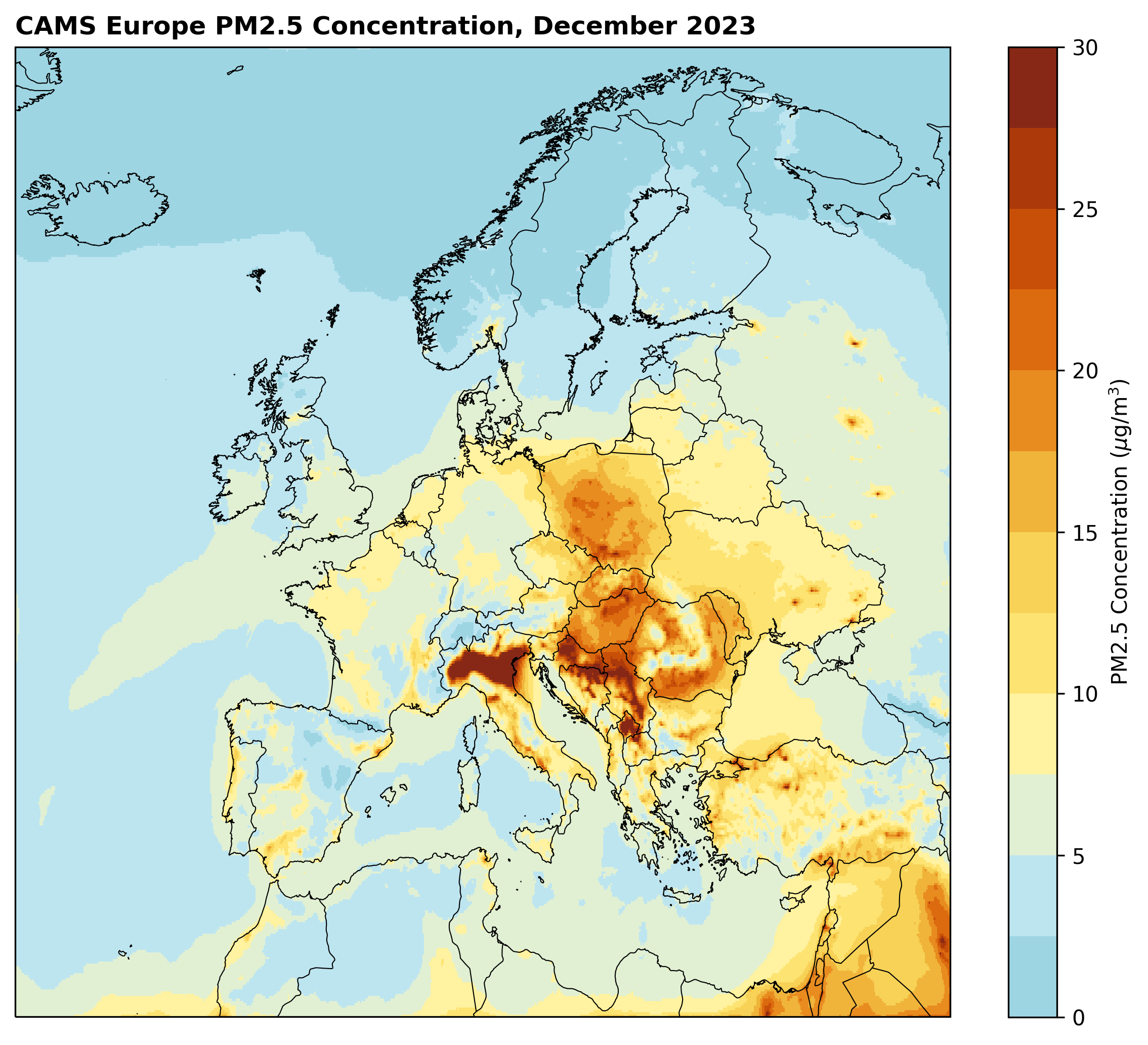
Monthly mean PM2.5 surface concentration across Europe. Calculated using the ensemble median from CAMS Europe air quality forecast (0.1°x0.1° resolution; available via the Copernicus Atmosphere Data Store).
The term particulate matter (PM) refers to particles made of dust, dirt, smoke, or liquids that are suspended in the air. In the AD4GD project, we primarily focus on particles with diameters of less than 10 microns (PM10) and 2.5 microns (PM2.5). These particles pose a significant risk to human health because they can deeply penetrate the lungs, and PM2.5 has the potential to enter the cardiovascular system (Source: US EPA).
How does poor air quality affect health?
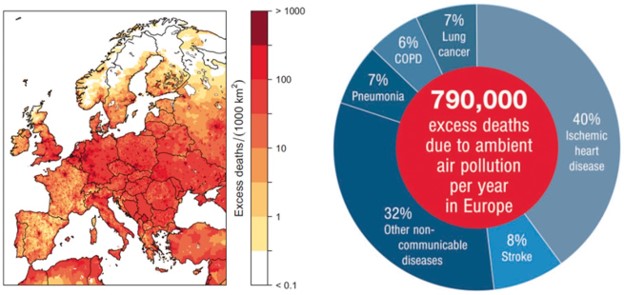
Regional distribution of estimated annual excess mortality rates from cardiovascular diseases (Lelieveld et al., 2021).
What are the challenges and opportunities of using low-cost IoT sensors?
The challenge of using low-cost sensors for air quality monitoring lies in their accuracy and reliability, which is not comparable to more expensive devices. These sensors are generally less durable, which can result in false signals or drifts over time, requiring their frequent replacement. Moreover, as these devices are maintained by non-professionals, there is a concern that measurement standards may not be consistently met, thereby affecting the quality and reliability of the measurement.
The opportunities of using low-cost sensors for air quality monitoring are significant. They enable the establishment of dense measurement networks that provide real-time, localized data on air pollution levels. These data can help in identifying pollution hotspots and trends, serving as a foundation for early warning systems that alert communities to unhealthy air conditions. Additionally, the extensive data collected over time supports long-term medical studies, offering insights into the impacts of air quality on public health. Thus, these sensors can inform mitigation and policy strategies, facilitate public health decisions, and contribute to more informed environmental and health research.
A goal of this pilot is to evaluate their usefulness and how they can be complemented by existing standard systems as reference sensors or model data.
How do we engage with citizen communities?
Engaging with citizen communities in urban air quality monitoring involves enhancing the distribution of low-cost IoT sensors to citizens and thereby enabling them to contribute to air quality data collection. This initiative fosters community involvement by educating and empowering individuals to monitor and understand local air pollution levels. For instance through accessible data platforms, citizens become informed participants and advocates for air quality improvement, enhancing both local engagement and environmental awareness.
Why is this important for Europe?
Advocating for a proper air quality is crucial to achieve the Green Deal goals of zero pollution in air, water and soil which targets “ improving air quality to reduce the number of premature deaths caused by air pollution by 55%” and “aligning the air quality standards more closely to the latest recommendations of the World Health Organisation”. (Source: European Commission).
Addressing this issue is also key for achieving the Sustainable Development Goals (SDGs). On one hand, the SDG target 3.9 aims to “substantially reduce the number of deaths and illnesses from hazardous chemicals and air, water and soil pollution and contamination” by 2030. Equally, the SDG target 11.6 ambitions to “reduce the adverse per capita environmental impact of cities, including by paying special attention to air quality and municipal and other waste management”
Tackling air pollution also benefits SDG target 13 on climate action in a scenario of complex interactions and local idiosyncrasies. Compliance with climate change mitigation policies could reduce PM2.5 emissions by 17% and prevent more than 74,000 premature deaths annually in Europe. (Source: WHO).
Do you want to learn more?

Enhancing Air Quality Monitoring with IoT and Low-Cost Sensors
Many European cities have air quality below WHO recommendations. IoT technology and low-cost sensors driven by citizen science offer a cost-effective solution to monitor air pollution.

Unlocking the Potential of Unconventional Data in Environmental Observations with Ulrike Falk from ECMWF
How is ECMWF participating in the integration of environmental satellite data with IoT and socioeconomic information whithin the context of the AD4GD project?
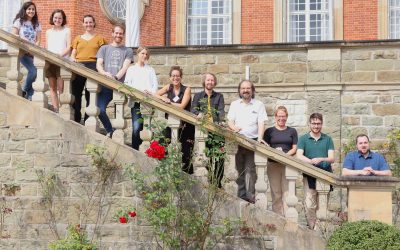
AD4GD pilots begin their journey with a workshop in Bonn
During the workshop, organized by Fraunhofer FIT, the most important features to be included in the pilots solutions were defined.
Stay tuned with us!
We share all our news & events in our newsletter